The Walt Disney Company held its 2026 Annual Meeting of Shareholders this week, and new CEO Josh D’Amaro outlined his vision for the future, making a case for why Disney is unrivaled, and highlighting the strengths of the streaming services, box office slate, and at the theme parks–while also looking forward to the billions of dollars of planned investments during his tenure.
Of particular interest was D’Amaro discussing the state of Hollywood: “Simply put, while others in our industry are consolidating just to compete, or struggling to be relevant in a fragmented and disrupted world, Disney is in a category of one, poised to accelerate into our next era of innovation and growth. And this next chapter will be driven by staying focused on world-class creativity, enhanced by technology, bringing unforgettable stories to audiences wherever they are.”
He went on to explain how Walt Disney was thinking beyond the silver screen to music, television, merchandise, and theme parks. That vision has grown to encompass sports, news, games, streaming, cruise ships, hotels, and more–with Disney’s businesses reinforcing and amplifying one another.
D’Amaro credited the fans at the center of it all, and that there’s nothing like the extraordinary connection between Disney and its fans. There’s nothing quite like it, and decades later, that connection has never been more powerful than it is today. It’s Disney’s greatest competitive advantage.
It was a powerful statement when considering the subtext: Disney is nothing like Paramount or Warner Brothers. I’m not sure the argument is quite as persuasive (to investors–the target audience of the meeting) when comparing Disney to Netflix, which has seen its stock rise during the last several years whereas Disney has largely traded sideways.
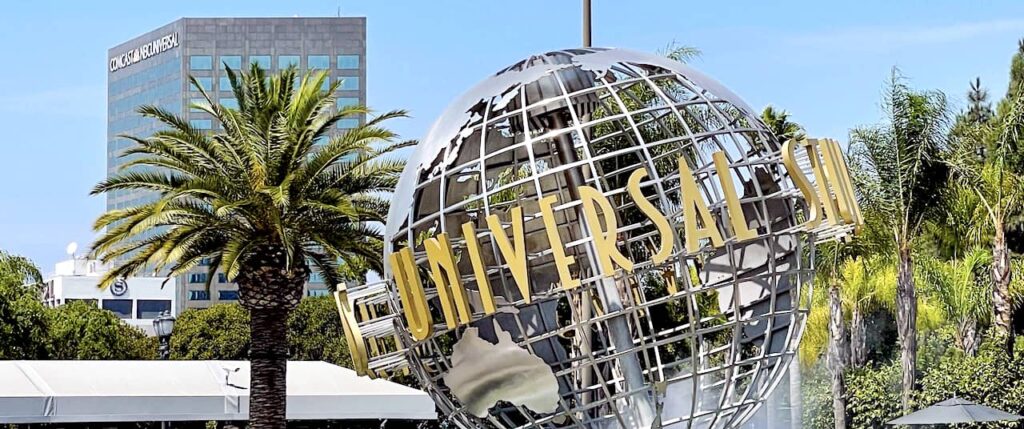
It nevertheless would probably be fair to argue that even as Netflix has outperformed the industry, there are not fans of Netflix in the same way as Disney. About the only company I could see as even playing the same sport from a fandom perspective is Universal (not just the theme parks, the respective parent companies as a whole), and even that isn’t the same league.
Unsurprisingly, D’Amaro received pushback during the Q&A portion of the meeting. In addition to the two questions at the beginning and end about the future of Journey into Imagination, this also included the obligatory question about Disney’s pricing problem at the parks & resorts, which has been an ongoing topic for the last year-plus, and a couple of other areas of common concern. Here’s a rundown…
Disney Parks Pricing & Attendance Growth vs. Guest Satisfaction
One shareholder asked how does Disney Parks & Resorts balance revenue growth with higher ticket pricing and attendance while maintaining positive guest satisfaction scores?
“This is an important question,” D’Amaro responded. He continued by acknowledging that visiting Walt Disney World or Disneyland is “a meaningful investment for families.”
“Our goal is for every single guest to feel that their experience is worth it,” explained D’Amaro. “Basically, we want this experience to be the best day of a guest’s life. And we’re always measuring our success here.”
In evaluating the parks’ success, Disney cited guest satisfaction and intent to revisit or recommend metrics, which are “very high” across all Disney parks.
“When it comes to how we think about pricing,” D’Amaro continued, “we focus on offering a wide range of options at different price points so that families can visit in ways that work for them, whether that’s during a value season or taking advantage of multi-day ticket savings or even special offers.”
D’Amaro pointed specifically to Disneyland’s Kids’ Summer Ticket Offer, which offers children’s Park Hopper tickets for $50 per day, as well as the stackable Kids Eat Free in 2026 at Walt Disney World promo. (D’Amaro didn’t emphasize stackability…but maybe he should’ve!)
“We try to provide a fair amount of choice and flexibility for guests while at the same time making sure that we’re managing daily attendance and the overall guest experience,” D’Amaro concluded.
A very similar question was asked last year, expressing concern about the impact of price increases on affordability and attendance, and the need to further increase capacity to prevent losing fans in the long term. At that time, it followed shortly after the bombshell reporting that Walt Disney World is Worried About Its High Prices by the Wall Street Journal.
In case you missed it, that report revealed concerns about Disney pricing out the middle class, not just among fans, but that alarms are also being sounded inside the company, as executives fear price increases are alienating fans and souring sentiment. According to WSJ, “some inside Disney worry that the company has become addicted to price hikes and has reached the limits of what middle-class Americans can afford.”
Current and past employees of the Walt Disney Company who were involved with discussions about pricing and corporate strategies for the theme parks revealed that “internal discussions over whether Disney parks may be losing their grip on the hearts and wallets of families with young kids have become more frequent.” And then there was this: “Starting in late 2023, the company’s own internal surveys of Walt Disney World and Disneyland guests found that the number of them planning return trips had ticked sharply down.”
While that was a huge story that actually resulted in a response (or several) from Disney, it wasn’t exactly new news. In fact, it struck us as strikingly similar to a previous WSJ piece after the Chapek ouster. In that, Bob Iger made it clear that he had been “alarmed” by price increases at Walt Disney World and Disneyland, and was concerned that Chapek was “killing the soul” of Disney.
A little over a month later, Walt Disney World made 3 big changes to restore value and improve flexibility, including the return of free overnight parking at the hotels. Mere months after that, the company announced 5 major improvements to make your visit easier. Then there was the switch from Genie+ to Lightning Lane Multi-Pass along with other queueing changes aimed at better balancing the interests of all guests.
In something of a full circle moment, former CEO Michael Eisner criticized the “wild” overpricing problem of Walt Disney World and Disneyland in an interview last month when discussing how his successor, Bob Iger, has done things differently from him. He also offered a ‘gentle’ reminder of the old school Disney philosophy that every guest is a VIP (or should be) when congratulating Josh D’Amaro on being named Disney CEO.
Most of what D’Amaro said in his answer was strikingly similar to an answer Iger gave last year to a similar question, which felt pulled from the press release that was issued in response to that WSJ piece (hence referencing it again, a year later).
The most notable portion of D’Amaro’s answer, from my perspective, is his statement that guest satisfaction scores and other key metrics are all “very high” for all Disney parks. This wasn’t the case at one point during the Chapek era, although a lot has obviously changed since then.
In the year since the WSJ report, there have also been a lot of special offers aimed at young families and the general public, as a whole. D’Amaro highlighted some of these, but there have been plenty of other deals and clear efforts to address affordability and appeal more to middle class families.
This is not to say that Disney has undone the massive prices increases during the pent-up demand era or the parks are reasonably priced again; just that the last year or so has offered several steps in the right direction.
Lightning Lane Rules at WDW vs. DLR
Another shareholder inquired about Disney’s reasoning behind the Lightning Lane differences between Walt Disney World and Disneyland, particularly the rules about ride reservation booking times.
As you might recall, the change from Genie+ to Lightning Lane Multi-Pass brought with it pre-booking at Walt Disney World, bringing it more in line with FastPass+, albeit paid and with different booking windows, attraction tiers, and other minor distinctions. (Costing money is definitely the big one!)
Meanwhile at Disneyland, the switch from Genie+ to Lightning Lane Multi-Pass was in name only. At the time, we explained that this was almost certainly due to the Genie+ brand being so irredeemably tainted and toxic, like Philip Morris, Monsanto, or Robert Chapek.
We’ve also explained repeatedly that differences in line-skipping products from one coast to the other were almost entirely due to divergent demographics. Whereas purchasers of Lightning Lanes at Walt Disney World are overwhelmingly tourists, and many of them first-timers or on once in a lifetime trips, it’s predominantly Californians and repeat visitors at Disneyland.
Josh D’Amaro more or less confirmed our previous explanations, albeit with different words. He explained that Walt Disney World and Disneyland “operate in really different ways, and our Lightning Lane systems are designed to reflect how guests experience each of those resorts.”
He shared that at Walt Disney World, guests typically plan farther in advance and have more theme parks to choose from. By contrast, Disneyland is contained within a more compact footprint with two theme parks located side by side.
D’Amaro added that there’s “a lot of dynamic flow between attractions and the parks” at Disneyland. He nevertheless emphasized that Disney’s objective is the same regardless of coast: “to offer a convenient and an optional way to reduce time, spent waiting in line, and add flexibility to the day in a way that fits how each resort actually operates.”
He concluded by sharing that Disney is always evaluating guest feedback, analyzing how guests use these products, as well as operational performance to make sure that they’re giving guests the best experience possible.
DAS Restructuring
Towards the end of the meeting, there was a question that asked whether Disney would consider “restructuring the Disability Access Service program to ensure it benefits everyone who needs it?”
This wasn’t the first time in the meeting that DAS came up. Prior to the Q&A, there were four shareholder proposals that were presented and voted on, including #7: “Independent Review and Report on Accessibility and Disability Inclusion Practices.” As discussed in Disability Access Service Review Proposal Fails, Only 5% of Disney Shareholders Support, that was voted down.
We also explained there how using the shareholder proposal mechanism was an inventive angle for contesting the DAS changes, as opposed to using the Q&A. That the proposal brought more attention to the ongoing DAS discussion, especially before the annual meeting.
Ultimately, the outcome there was no different than it would’ve been coming up during the Q&A, where “Josh D’Amaro might’ve given a diplomatic answer that offered false hope, but that’s about it.” Well, as it turned out, it was a two-pronged approach during the meeting. Here’s D’Amaro’s diplomatic response.
D’Amaro did not say that Disney would consider restructuring the DAS program. Instead, he began by acknowledging the “fact that we know that accessibility is deeply personal, and for many families, our services for guests with disabilities, they make it possible to enjoy our parks together.”
“Creating a welcoming and inclusive environment for all guests, especially those with disabilities,” D’Amaro continued. “It’s foundational to who we are.” He explained that the current approach to Disability Access Service “reflects really extensive work that we’ve done with accessibility experts, and medical professionals, all in an effort to better understand individual needs, and then really thoughtfully match guests with the right levels of support.”
D’Amaro explained that it’s important for Walt Disney World and Disneyland to have individual conversations with families, and that the parks offer a broad range of accommodations that Cast Members can recommend following individual conversations.
He concluded by offering a glimmer of hope: “As we look ahead, as we always do, we’ll continue to listen, we’ll learn and apply expert guidance, we evaluate these accommodations over time, and we’ll always be focused on providing great experiences and designing these services to support our guests.”
Ultimately, none of these questions came as huge surprises, and honestly, I don’t think D’Amaro’s answers offer any new insight. As with the questions about Journey into Imagination, the company likely anticipated these questions or others like it, and D’Amaro was prepped on how to respond, choosing his words very careful.
Perhaps the biggest takeaway from all of this is that D’Amaro is deftly skilled, like Iger, of sticking to the script while giving a warm and lengthy response…that doesn’t really say anything. That’s not backhanded criticism! It’s an important skill for the CEO of the Walt Disney Company to have in such scenarios, and practically the opposite of Chapek, who sometimes offered blunt and succinct responses that managed to inflame and enrage. The Q&A not offering a whole lot in the way of new information is proof positive of this being a smooth succession so far.
Planning a Walt Disney World trip? Learn about hotels on our Walt Disney World Hotels Reviews page. For where to eat, read our Walt Disney World Restaurant Reviews. To save money on tickets or determine which type to buy, read our Tips for Saving Money on Walt Disney World Tickets post. Our What to Pack for Disney Trips post takes a unique look at clever items to take. For what to do and when to do it, our Walt Disney World Ride Guides will help. For comprehensive advice, the best place to start is our Walt Disney World Trip Planning Guide for everything you need to know!
YOUR THOUGHTS
What do you think of D’Amaro’s response to the questions of balancing price increases with attendance and guest satisfaction, Lightning Lane rules at Walt Disney World vs. Disneyland, or the potential for future DAS changes? What would you like to see done to improve the guest experience and satisfaction at Walt Disney World? Think that runaway price increases are the big concern, or is the value proposition an equally or more significant matter? Do you agree or disagree with our assessment? Any questions we can help you answer? Hearing your feedback–even when you disagree with us–is both interesting to us and helpful to other readers, so please share your thoughts below in the comments!
Get our free newsletter!
Sign up for news, Disney deals & free planning tips